Commercial Kitchen Negative Pressure Solutions: The Complete Guide
Introduction
Commercial kitchens operate in one of the most demanding indoor environments. Every day, exhaust hoods remove thousands of cubic meters of hot air, smoke, grease, moisture, and cooking odors. While exhaust systems are essential, many kitchens overlook an equally important factor: air replacement.
When more air is exhausted than supplied, the kitchen develops negative pressure. This imbalance reduces ventilation performance, increases energy consumption, creates uncomfortable working conditions, and can even affect food quality and customer experience.
At LCCFAIR (Shenzhen Lanchang Technology Co., Ltd.), we specialize in commercial kitchen air conditioning, make-up air systems, water-cooled fresh air units, and integrated ventilation solutions that eliminate negative pressure while improving indoor comfort and energy efficiency.
This guide explains everything you need to know about commercial kitchen negative pressure and how to solve it effectively.
Table of Contents
- What Is Negative Pressure?
- Why Does Negative Pressure Occur?
- Signs Your Kitchen Has Negative Pressure
- Risks of Ignoring Negative Pressure
- How to Solve Kitchen Negative Pressure
- Choosing the Right Make-Up Air System
- Industry Applications
- Why Choose LCCFAIR
- Frequently Asked Questions
What Is Negative Pressure in a Commercial Kitchen?
Negative pressure occurs when the exhaust system removes more air than is supplied back into the kitchen.
As the kitchen loses air, indoor pressure becomes lower than outdoor pressure. Air is then pulled into the building through doors, windows, gaps, and other openings instead of entering through a controlled fresh air system.
A balanced commercial kitchen should maintain proper airflow where the exhaust volume and supply air volume work together efficiently.
Why Does Negative Pressure Occur?
The most common causes include:
- Oversized exhaust fans
- Insufficient make-up air
- Poor ventilation design
- Closed doors and windows
- Aging ventilation equipment
- Lack of fresh air supply
- Incorrect HVAC balancing
Many restaurants invest heavily in powerful exhaust systems but ignore the fresh air side of the ventilation equation.
Warning Signs of Kitchen Negative Pressure
Your kitchen may be suffering from negative pressure if you notice:
- Doors are difficult to open
- Smoke escapes from the hood
- Cooking odors spread into the dining area
- High kitchen temperatures
- Employees complain about heat and discomfort
- Poor exhaust hood performance
- Increased air-conditioning costs
- Dust entering through door gaps
- Flames becoming unstable on gas equipment
These symptoms indicate that the kitchen ventilation system is out of balance.
Why Is Negative Pressure Dangerous?
Ignoring negative pressure can lead to several operational issues.
Reduced Ventilation Efficiency
Exhaust hoods lose capture efficiency, allowing grease and smoke to escape into the kitchen.
Higher Energy Costs
Air-conditioning systems work harder because conditioned air is constantly pulled out of the building.
Employee Discomfort
High temperatures reduce productivity and increase fatigue, especially during peak cooking hours.
Indoor Air Quality Problems
Smoke, grease particles, moisture, and odors remain inside the kitchen.
Equipment Wear
Ventilation systems, exhaust fans, and HVAC equipment operate under unnecessary stress, shortening their service life.
Professional Solutions for Kitchen Negative Pressure
1. Install a Kitchen Make-Up Air System
A make-up air system replaces the air removed by the exhaust hood with filtered outdoor air.
Benefits include:
- Balanced indoor air pressure
- Improved hood capture efficiency
- Better indoor air quality
- Lower operating costs
- Increased employee comfort
2. Install a Water-Cooled Fresh Air Unit
In hot climates, supplying untreated outdoor air can increase indoor temperatures.
A water-cooled fresh air unit provides fresh outdoor air while reducing its temperature before it enters the kitchen.
Advantages include:
- Lower supply air temperature
- Energy-efficient operation
- Fresh outdoor air
- Reduced kitchen heat
- Lower cooling costs
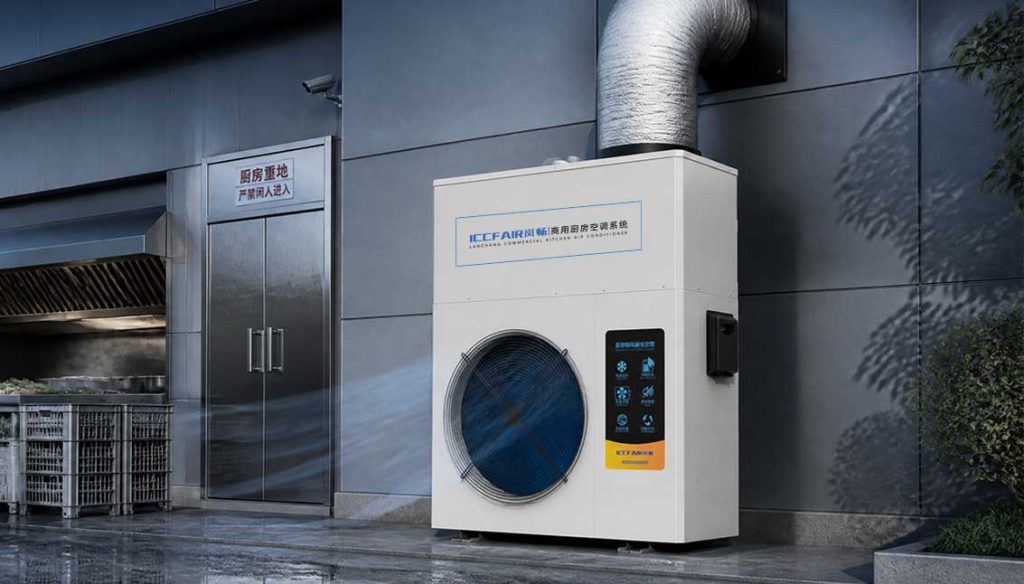
LCCFAIR Water-Cooled Fresh Air Units are designed specifically for commercial kitchens, factories, restaurants, internet cafés, billiard halls, and other commercial spaces requiring continuous fresh air.
3. Install a Commercial Kitchen Air Conditioner
Unlike residential air conditioners, commercial kitchen air conditioners are engineered to operate in high-temperature, grease-laden environments.
A dedicated kitchen air conditioner provides localized cooling for chefs and kitchen staff while maintaining reliable performance under demanding conditions.
LCCFAIR commercial kitchen air conditioners feature:
- High-efficiency cooling
- Commercial-grade durability
- Energy-saving operation
- Continuous heavy-duty performance
- Flexible installation options
4. Balance Exhaust and Supply Air
Professional ventilation engineers should calculate:
- Exhaust airflow
- Supply airflow
- Air changes per hour (ACH)
- Hood capture velocity
- Building pressure balance
Proper balancing ensures that fresh air replaces exhausted air efficiently without creating excessive positive or negative pressure.
Industry Applications
Professional negative pressure solutions are widely used in:
- Restaurants
- Hotels
- Central kitchens
- School cafeterias
- Hospital kitchens
- Factory canteens
- Food processing plants
- Barbecue restaurants
- Hot pot restaurants
- Fast-food chains
- Internet cafés
- E-sports arenas
- Billiard halls
- Industrial workshops
- Manufacturing facilities
Each application requires a customized ventilation strategy based on cooking equipment, occupancy, and operating conditions.
Why Choose LCCFAIR?
LCCFAIR is dedicated to creating complete environmental control solutions for commercial and industrial spaces.
Our product range includes:
- Commercial Kitchen Air Conditioners
- Kitchen Make-Up Air Systems
- Water-Cooled Fresh Air Units
- Supply Air Systems
- Commercial Ventilation Equipment
- Negative Pressure Solutions
- Industrial Cooling Systems
Why customers choose LCCFAIR:
- Customized engineering solutions
- Energy-efficient technologies
- Professional technical support
- Reliable commercial-grade equipment
- OEM & ODM manufacturing
- Global project experience
Rather than simply supplying equipment, LCCFAIR helps customers build balanced, energy-efficient, and comfortable working environments.
Best Practices for Preventing Negative Pressure
To maintain optimal kitchen performance:
- Inspect ventilation systems regularly.
- Clean exhaust hoods and ductwork.
- Replace air filters on schedule.
- Verify airflow balance after equipment upgrades.
- Ensure make-up air volume matches exhaust demand.
- Consider cooling fresh air before introducing it into the kitchen.
- Work with experienced commercial kitchen ventilation specialists.
Frequently Asked Questions (FAQ)
What is kitchen negative pressure?
Kitchen negative pressure occurs when more air is exhausted than supplied, creating an imbalance that affects ventilation and indoor comfort.
Can negative pressure reduce exhaust performance?
Yes. Excessive negative pressure reduces hood capture efficiency and allows smoke and grease to escape into the kitchen.
How do I know if my kitchen has negative pressure?
Common signs include difficult-to-open doors, smoke leakage, uncomfortable heat, and poor ventilation performance.
What is the best solution for kitchen negative pressure?
The most effective approach is to combine a properly sized make-up air system with balanced ventilation. In hot climates, adding a water-cooled fresh air unit and a commercial kitchen air conditioner can further improve comfort and efficiency.
Does every restaurant need a make-up air system?
Most commercial kitchens with exhaust hoods benefit from a dedicated make-up air system, especially those operating high-capacity cooking equipment.
Conclusion
A commercial kitchen cannot achieve efficient ventilation with exhaust alone. Proper air replacement, balanced airflow, and effective cooling are essential to maintaining a safe, comfortable, and energy-efficient environment.
Whether you operate a restaurant, hotel, school cafeteria, central kitchen, factory canteen, internet café, or industrial workshop, addressing negative pressure will improve ventilation performance, reduce operating costs, and enhance employee productivity.
LCCFAIR (Shenzhen Lanchang Technology Co., Ltd.) provides professional commercial kitchen air conditioners, make-up air systems, water-cooled fresh air units, and customized negative pressure solutions tailored to your facility’s unique requirements.
If you are planning a new commercial kitchen or upgrading an existing ventilation system, LCCFAIR can help you design a complete solution that delivers reliable performance, energy efficiency, and long-term value.
